
WHAT’S THE DIFFERENCE BETWEEN PROBIOTICS AND PREBIOTICS?
PROBIOTICS – are made up of good bacteria and yeasts that naturally live in our bodies. We always have both good and bad bacteria, and these need to be kept in balance – with more good than bad. The good guys keep our bodies healthy and working well. We need to make sure that they are in charge, and so we need to feed them.
We can keep topping up the good gut bacteria by eating probiotics too. These fermented foods contain probiotics:
• Yogurt
• Buttermilk
• Cottage cheese
• Kefir
• Kombucha
• Kimchi
• Tempeh
• Miso
• Fermented pickles
• Apple Cider Vinegar (with the mother
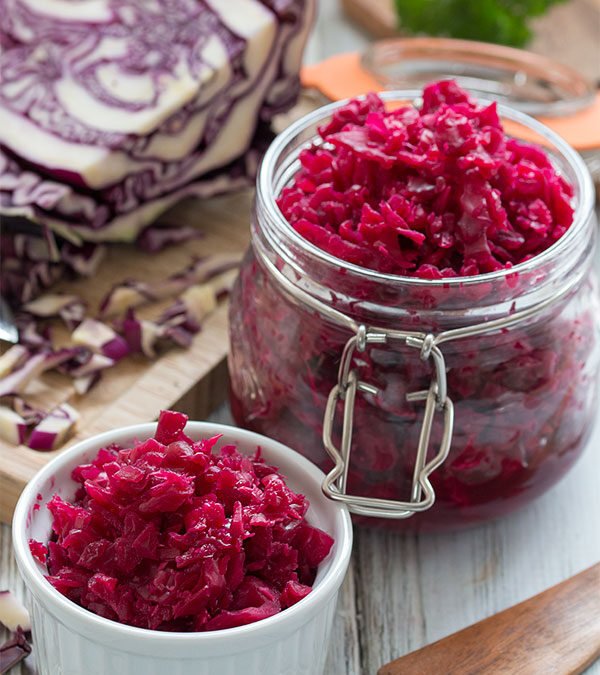
• Sauerkraut
WHAT ARE PREBIOTICS?
Prebiotics refer to a specific type of fibre that only the good gut bacteria are able to ferment or feed on. That’s right, the bad guys can’t eat them!
When the good guys ferment the fibre, they produce short chain fatty acids like butyrate, which strengthens the gut lining and strengthens our immune system. They do many other good things too.
If we DON’T feed the good guys, they die off and the bad guys take over. The bad guys can’t eat fibre, but they love refined foods, fast foods and pre-packaged foods. Sugar and flour – they adore…
TO SUMMARISE: Prebiotics are food for probiotics. They act as the fertilizer that nourishes them.
FOODS HIGH IN PREBIOTICS
Only certain foods contain types of fibre that the good bacteria can ferment. They are mostly soluble fibres which form a gel-like substance in the gut.
1. CHICORY ROOT – is a woody herb that contains inulin. Research shows that inulin is linked to improved digestion and bowel movements and supports healthy cholesterol and blood sugar levels.
Whole chicory root can be boiled whole and eaten like a vegetable, but for the most part, ground chicory root is available and can be brewed like coffee. It even tastes like coffee, just a bit more bitter and nutty. (See my earlier post on chicory coffee).
2. DANDELION GREENS – Yes, dandelions are edible, and the greens are packed with vitamins (A, C, E, and K), calcium, iron, magnesium, and prebiotic fibre.
Like chicory root, the fibre in dandelion greens is mainly inulin. There are 400 species of dandelion, and although they are considered to be a weed, people have been foraging and eating them for centuries.
There are many different ways to enjoy dandelion greens. Try adding them to a salad with chives and lettuce, or to a smoothie.
3. CHIA SEEDS – Although tiny, chia seeds are bursting with fibre.
Dry chia seeds are small, hard, and round. But when they’re soaked in a liquid, they produce a transparent gel full of soluble fibre which the good gut bacteria love. It can help with the absorption of minerals like zinc and iron.
Chia seeds can be added to oats, jams, yoghurt or water. I’ve done a post on Chia seeds too.
4. GARLIC – offers a type of prebiotic fibre called fructo-oligosaccharides, accounting for 75% of its dry weight.
Studies show that fibre from garlic encourages the growth of good bacteria, like Bifidobacteria, and inhibits the growth of the less desirable Clostridia species.
5. OATS- Rolled oats, or steel-cut oats, contain a large amount prebiotic soluble fibre from beta-glucans. It is the outer husks that the probiotics love to munch on and then ferment. Instant oats do not have this beneficial effect.
So now that we know what foods our good gut bacteria like to eat – let’s feed them! They reward us by keeping us healthy.