
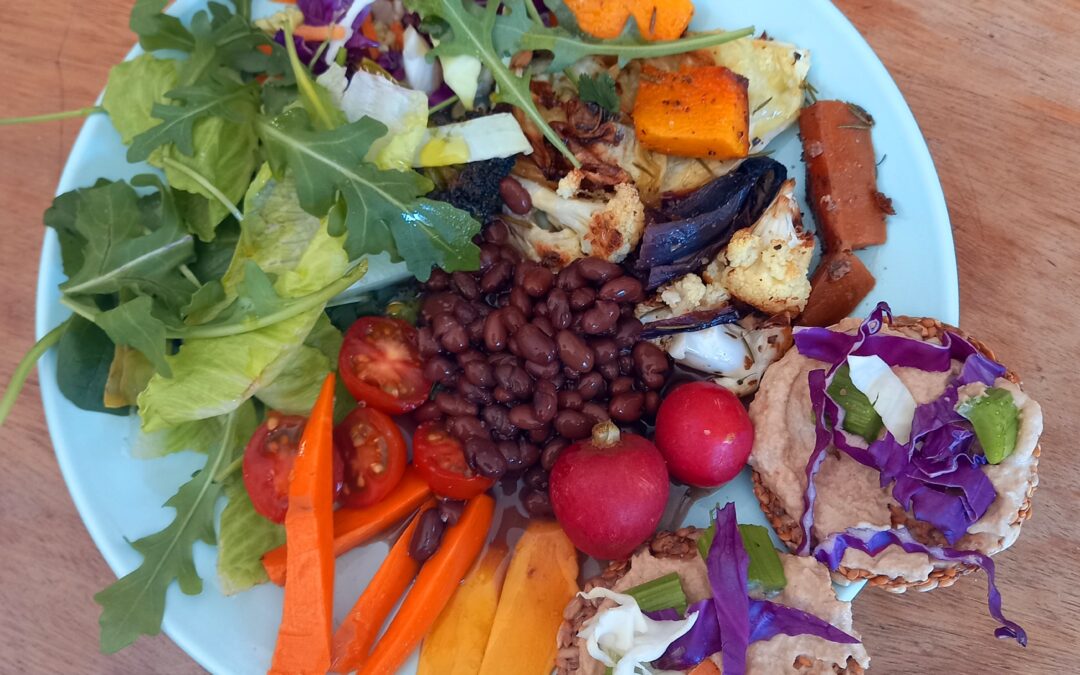
INCREASING YOUR FIBRE INTAKE – REMEMBER YOU’RE EATING FOR 100 TRILLION!
This is a follow-up to my previous post on Prebiotics and Probiotics, and as I said – Our Good Gut Bacteria (Probiotics) Thrive on FIBRE.
Fibre is a type of carbohydrate found in plant foods which the body can’t digest. It passes through the digestive tract to the colon, where the friendly bacteria digest it and produce short chain fatty acids that help our immune system, keep the gut lining healthy and prevent inflammation – supporting our physical and mental health. We need to keep them happy and feed them well. There are two kinds of fibre.
SOLUBLE FIBRE
This type of fibre dissolves in water to form a gel, which slows the digestion of food. It is the preferred food of the good guys. Soluble fibre can also lower blood sugar and cholesterol.
Good food sources of soluble fibre include apples, artichokes, asparagus, bananas, barley, beans, berries, broccoli, Brussels sprouts, dark leafy greens, legumes, lentils, nuts, oats, oranges, pears, peppers, and squash.
INSOLUBLE FIBRE
This type of fibre absorbs water, but does not dissolve. It helps move food and waste through the digestive system, which promotes regular bowel movements and prevents constipation.
Good food sources of insoluble fibre include beans, bran, carrots, cucumbers, celery, legumes, nuts, seeds, tomatoes, and whole grains.
*Cabbage has BOTH soluble and insoluble fibre (a 60% to 40% ratio)
• Aim to fill most of your plate with brightly coloured whole plant foods (eat the rainbow) – dark green, purple, red and orange.
• Choose whole grain rice, breads, and pastas instead of products made with refined or white flour.
• Get creative. If a recipe calls for animal protein, try making the dish with beans or legumes instead. This works well with soups, and stews.
• Swap juices for smoothies, using the same ingredients. The taste will be similar, and the fibre lost during the juicing process will be blended into the smoothie.